A laser pump flash lamp must match the crystal, cavity, power supply, cooling design, and service target of your solid-state laser system. This guide helps engineers, repair teams, and OEM buyers choose the right pump lamp, avoid mismatch risks, and reduce output instability, short lifetime, and unnecessary maintenance cost.
Why the Laser Pump Flash Lamp Matters in a Solid-State Laser System
The laser pump flash lamp is the energy source that drives optical pumping in many pulsed laser designs. If the lamp does not match the resonator and electrical system, the device may still flash, but laser output can become weak, unstable, or inefficient.
A suitable laser flash lamp should deliver repeatable energy into the gain medium. In a solid-state laser system, poor matching can turn useful input energy into excess heat. That heat may shorten lamp life, stress the laser rod, reduce beam quality, or force the operator to increase settings to maintain output.
For OEM manufacturers and maintenance teams, this is not a small component decision. The laser pump flash lamp affects performance, service interval, spare-part planning, and user confidence. Choosing only by appearance or price often leads to more expensive problems later.
Match the Pump Lamp to the Laser Crystal and Cavity
The first selection step is to understand the laser crystal and pump cavity. Different gain media absorb different parts of the lamp spectrum. A xenon flash lamp is widely used in many pulsed applications, while a krypton flash lamp may be selected for specific laser designs where its spectral characteristics fit better.
The laser pump flash lamp must also match the geometry of the cavity. Arc length should correspond to the effective length of the laser rod. If the arc is too short, pumping may be uneven. If it is too long, energy is wasted outside the useful area and extra heat enters the housing.
In a solid-state laser system, the reflector, cooling jacket, lamp position, and rod alignment work together. Even a technically good pump lamp can perform poorly if its arc position or tube diameter does not fit the optical design. This is why replacement selection should always start with original specifications, drawings, or measured dimensions.
Key Laser Flash Lamp Specifications to Check
Before ordering a laser flash lamp, confirm the main technical parameters instead of relying on photos or similar model names.
-
Arc length and effective pumping area
The laser pump flash lamp should illuminate the gain medium efficiently. Arc length is often more important than total lamp length. A wrong arc can reduce efficiency even when the pump lamp fits mechanically.
-
Tube diameter and overall dimensions
The laser flash lamp must fit the cavity, seals, holders, and cooling sleeve. Small dimensional differences can affect assembly, light collection, and water sealing.
-
Electrical rating
Confirm voltage range, pulse energy, peak current, and recommended operating limits. A xenon flash lamp or krypton flash lamp that is electrically mismatched may misfire, age quickly, or damage the power circuit.
-
Pulse width and repetition rate
The operating pulse must match the thermal capacity of the lamp and the duty cycle of the solid-state laser system. High repetition rates require stronger cooling and stricter electrical stability.
-
Electrode and connector design
The laser pump flash lamp should use electrode structures and terminals that match the original equipment. Poor connection increases resistance, heat, and discharge instability.
Electrical Compatibility for a Xenon Flash Lamp or Krypton Flash Lamp
Electrical compatibility is one of the most common causes of replacement failure. A xenon flash lamp or krypton flash lamp is part of a discharge circuit, so it must work with the capacitor bank, trigger transformer, charging voltage, wiring, and control board.
If the laser pump flash lamp is not compatible with the discharge circuit, symptoms may include delayed triggering, unstable output, frequent misfires, abnormal noise, visible electrode wear, or sudden lamp failure. In some cases, the lamp may flash normally at low settings but become unstable at full energy.
A laser flash lamp should be tested under real operating conditions, not only powered briefly on a bench. The final enclosure, cable routing, cooling structure, and duty cycle can change performance. For an OEM or repair project, the safest method is to compare output stability, temperature rise, and trigger reliability inside the complete solid-state laser system.
Cooling and Lifetime Factors for a Laser Pump Flash Lamp
Cooling directly affects lifetime. High pulse energy creates intense thermal stress, so the cooling structure must remove heat from the tube, electrodes, and nearby cavity components. Water cooling is common for high-energy or high-duty systems. Air cooling may be suitable for lower-load equipment, but it requires careful airflow design.
A pump lamp can fail early if cooling water is contaminated, flow rate is too low, seals are aging, or the lamp is not positioned correctly. Overheating may cause quartz discoloration, seal stress, output decay, and faster electrode erosion.
| Selection Factor |
What to Check |
Impact if Ignored |
| Arc length |
Match rod and cavity length |
Low efficiency or uneven pumping |
| Electrical rating |
Match voltage and pulse energy |
Misfire or short lamp life |
| Cooling method |
Confirm water or air cooling capacity |
Overheating and output decay |
| Connector design |
Match terminals and cable layout |
Poor contact and heat buildup |
| Supplier consistency |
Check batch quality and inspection |
Unstable replacement results |
A well-matched laser pump flash lamp does not only last longer; it also makes maintenance planning easier. Stable lifetime helps equipment owners prepare spare parts before failure and reduces emergency shutdowns.
Common Selection Mistakes to Avoid
One common mistake is choosing a replacement only by total length. Total length may look correct, but the arc position, tube diameter, electrode shape, and connector style can still be wrong. Another mistake is ignoring the original power supply design. If the discharge parameters differ, performance may change even when the lamp physically fits.
Some buyers also select the cheapest unit without considering lifetime data or batch consistency. A low-price replacement may seem economical, but if it causes output drift, repeat service calls, or early failure, the total cost becomes higher. For precision equipment, selection should be based on compatibility, stability, and supplier support.
A final mistake is replacing the lamp without checking the rest of the system. Dirty reflectors, weak cooling, aged capacitors, or damaged cables can make a new lamp appear defective. Proper diagnosis protects both the replacement part and the complete laser device.
Lumi Photoelectric Selection Support
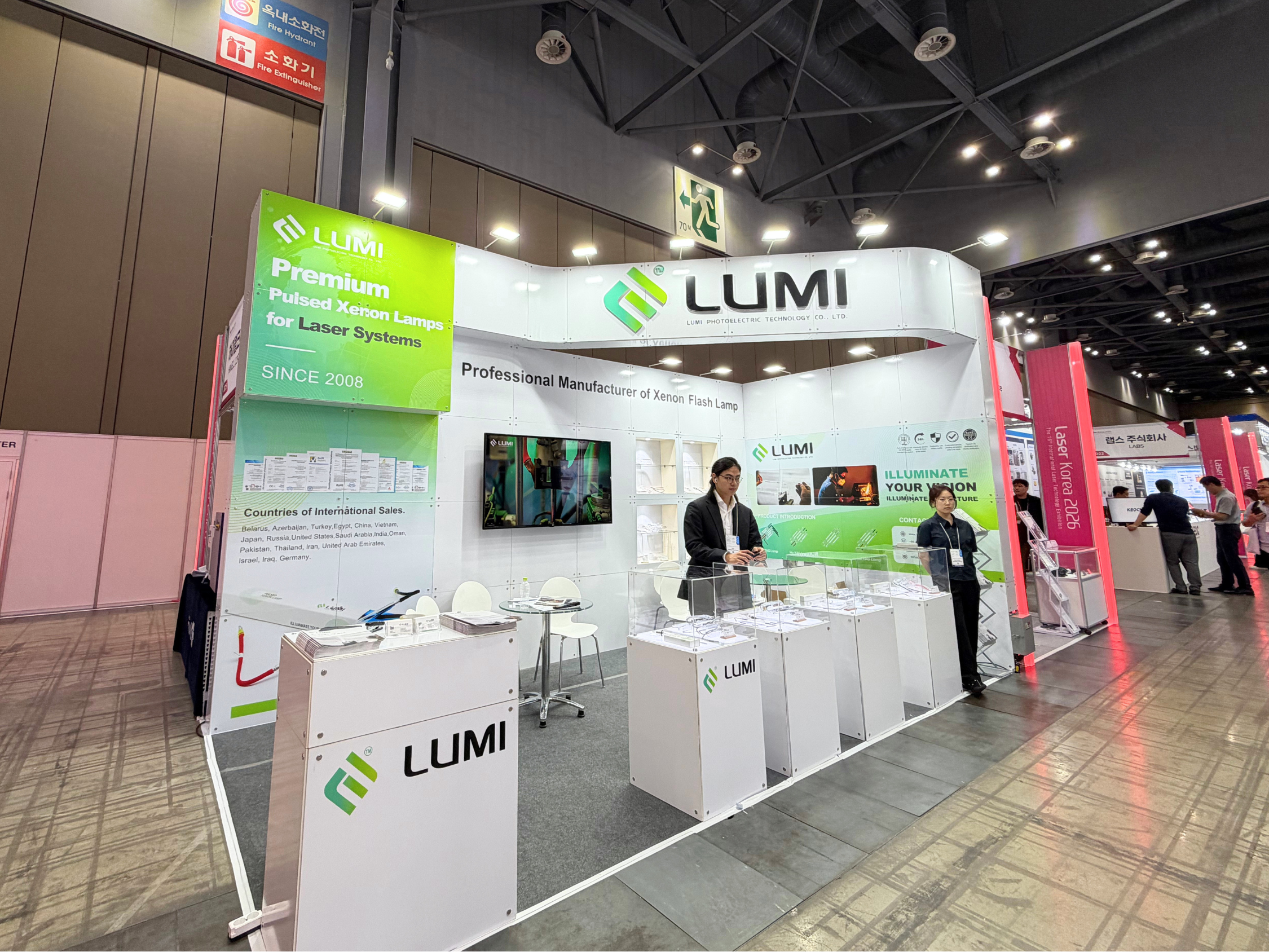
Lumi Photoelectric Technology Co., Ltd., located in Nanjing, China, supplies special light sources for laser, industrial, scientific, medical-aesthetic, and OEM equipment. Its product range includes xenon flash lamp products, krypton flash lamp products, germicidal lamps, solar simulator lamps, and customized light-source solutions for different applications.
For a solid-state laser system, Lumi Photoelectric can support specification discussion, dimensional matching, cooling compatibility review, and quality inspection communication. This helps engineers and procurement teams reduce selection risk when standard replacement parts are not enough.
Conclusion
Choosing a laser pump flash lamp requires matching optical geometry, electrical parameters, cooling conditions, and lifetime expectations—not just finding a lamp that looks similar. The right selection improves output stability, reduces service frequency, and protects the long-term value of laser equipment.
If you need help selecting or customizing a lamp for your laser device, contact Lumi Photoelectric with your drawings, electrical parameters, and application details. Our team can review your requirements and suggest a practical sourcing path for prototype testing or repeat production.

 EN